



Leave the first review for product
Product:
UFHGZ_OmniCheck_MaleGuangzhou United Family Hospital OmniCheck™ Comprehensive Version (Men's)
78items
Recommended for
- Men aged 40–65 who are concerned about blood sugar, blood lipids, liver, kidney and thyroid function, and also wish to take into account lung, fundus and related tumor markers.
Key inspection items:
- The examination includes fundus examination, low-dose CT scan of the lungs, and ultrasound examination of the liver, gallbladder, spleen, pancreas, kidneys, and thyroid gland, along with various liver and gallbladder function indicators, thyroid function tests, cardiovascular indicators, tumor markers, and a C13 breath test. For men, the examination also includes prostate ultrasound, prostate-specific antigen (PSA) testing, and free PSA testing.
HK$5,507.0
Member exclusive offer


No Hidden Fees
Choose the same timeslot to enjoy offer!
Compare
WishList
Ultrasound
Highlight
-
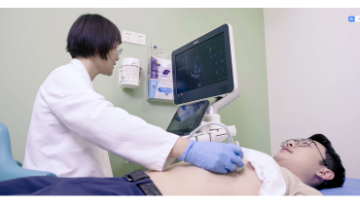
Ultrasound Upper Abdomen (Liver, Gall Bladder, Spleen, Pancreas)
-
Thyroid Ultrasound
-
Ultrasound Prostate- Male Only
-
Ultrasound Kidneys
Cancer Marker
Highlight
-
Alpha-fetoproteinIt is the most commonly used and important serum biomarker for diagnosing primary hepatocellular carcinoma (HCC). A significantly elevated level suggests the possibility of HCC and is also used for monitoring treatment efficacy and early warning of recurrence.
-
Carcinoembryoic Antigen (CEA)
-
Total prostate-specific antigen test - for men onlyDifferentiating between benign conditions such as prostatitis and benign prostatic hyperplasia (BPH) can serve as a basis for initial screening for prostate cancer.
-
Free prostate-specific antigen - for men onlyThis is a blood test indicator specifically for men, which, when combined with the total PSA ratio, can assess the risk of prostate lesions and prostate cancer.
-
Carbohydrate antigen 19-9A tumor marker associated with pancreatic cancer, gallbladder cancer, colon cancer, and stomach cancer, also known as gastrointestinal-associated antigen.
-
Carbohydrate antigen 125It is the most important tumor marker for ovarian cancer (used for auxiliary diagnosis, treatment monitoring, and recurrence monitoring).
-
Carbohydrate antigen 153These are primarily tumor markers commonly used in breast cancer, mainly for the auxiliary diagnosis, treatment monitoring, and recurrence early warning of breast cancer, especially showing high sensitivity for metastatic breast cancer (such as bone metastases and liver metastases).
CT Scan
Highlight
-
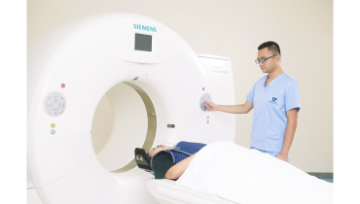
CT Low Dose Lung
H Pylori
Highlight
-
Carbon-13 Breath TestThe carbon-13 breath test can detect whether there is a Helicobacter pylori infection in the stomach.
Eye Check
Highlight
-
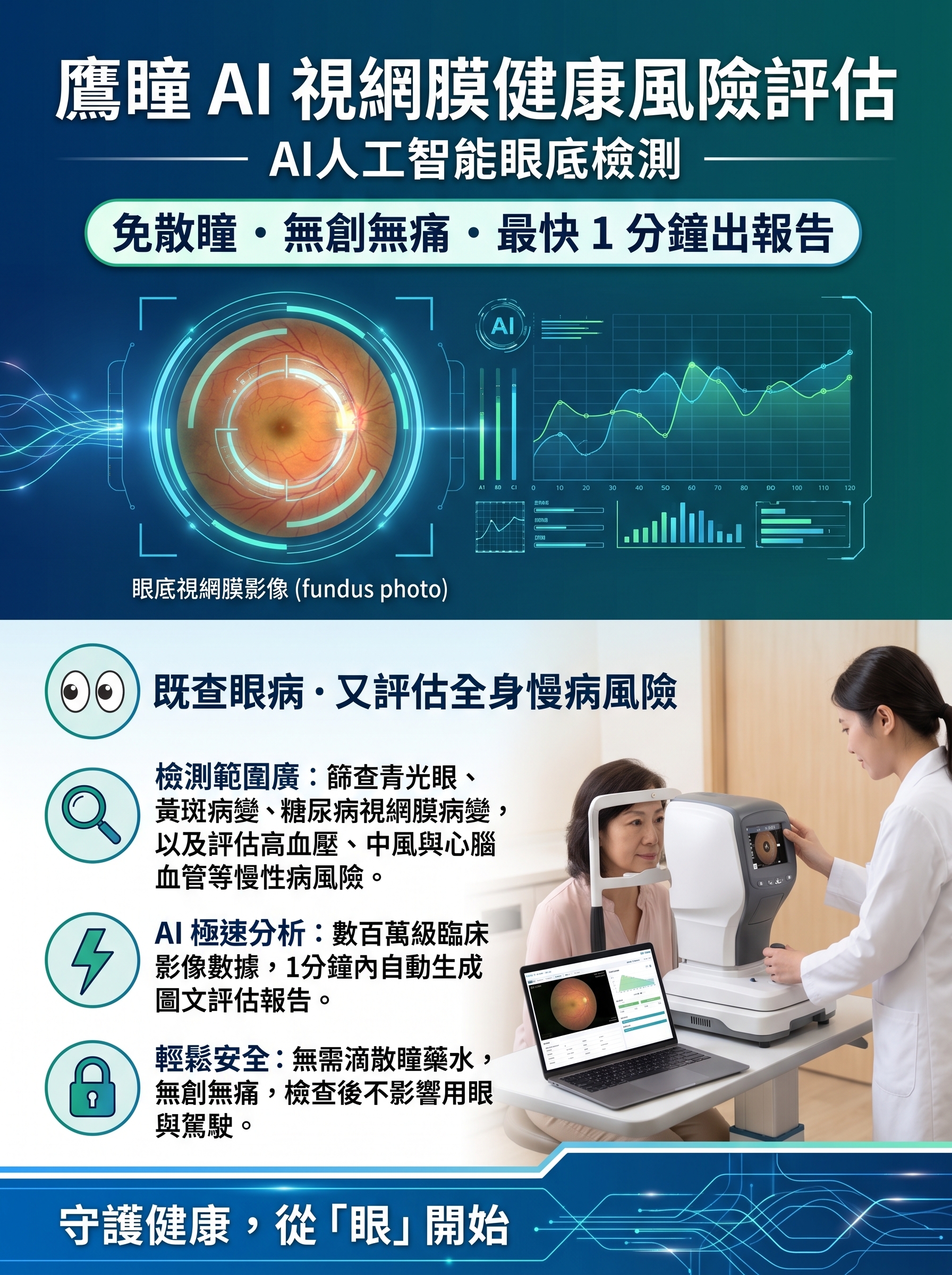
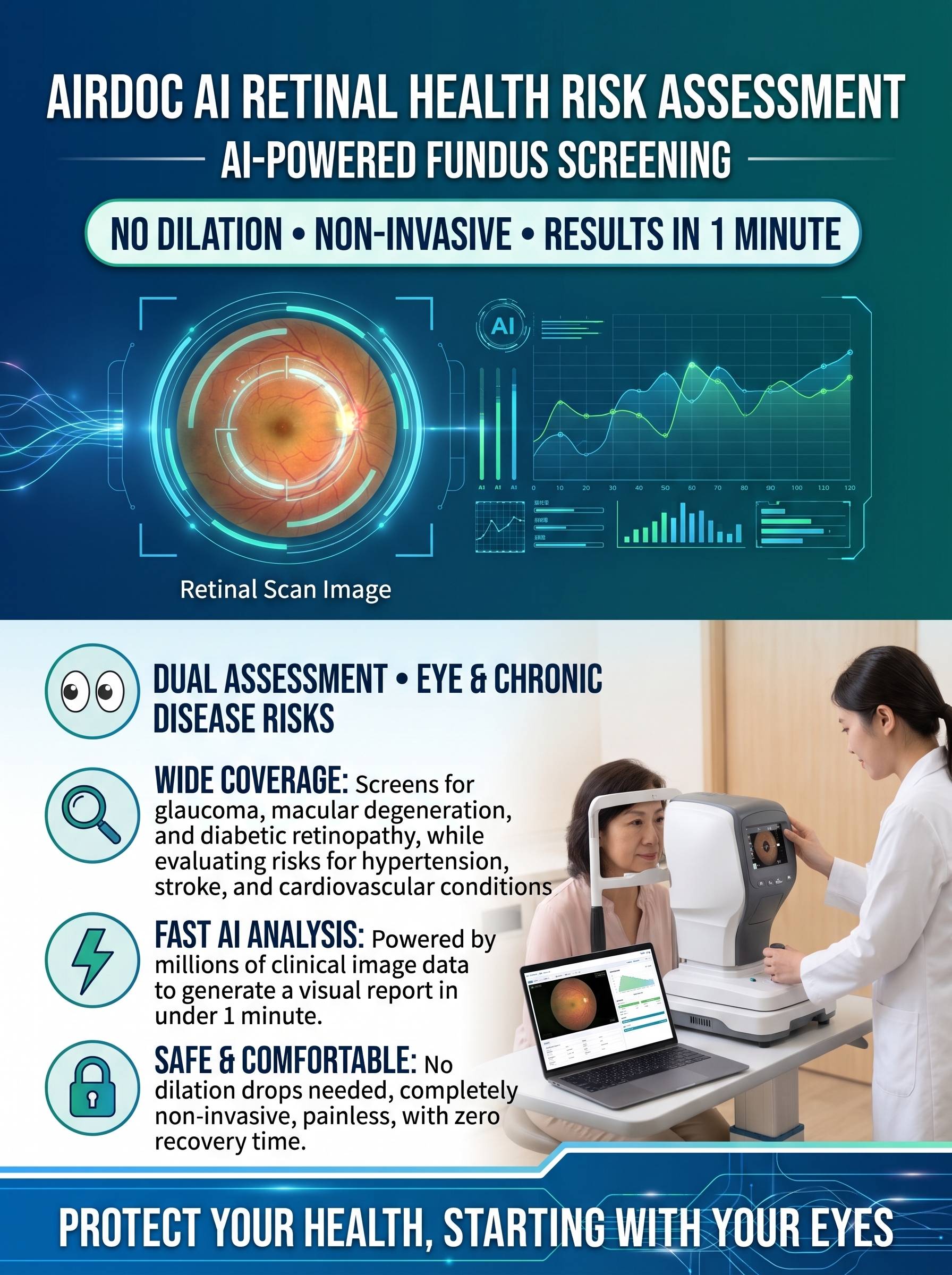
Eagle Eye Fundus DetectionThis test combines a non-mydriatic fundus camera with the Airdoc deep learning AI algorithm. By capturing high-resolution images of the fundus, it automatically identifies subtle lesions in retinal microvessels and nerves, thus achieving the effect of "detecting eye diseases and assessing the risk of systemic chronic diseases."
Cardiac Check up
-
Homocysteine
-
Resting Electrocardiogram ECG
Basic Health Assessment
-
Height
-
Weight
-
Body Mass Index
-
Blood Pressure
-
Waist Circumference
-
Hip Circumference
-
Waist / Hip ratio
-
Surgical ExaminationFocuses on evaluating external body structures and the musculoskeletal system.
-
Internal Medicine ExaminationExaminations of the thorax, heart and lungs, abdomen, nervous system, as well as inquiry into past medical history
Lipid
-
Total Cholesterol
-
Triglycerides
-
HDL Cholesterol (Direct)
-
LDL Cholesterol
-
Apolipoprotein A1
-
Apolipoprotein B
-
Lp(a)
-
Small Dense Low-Density Lipoprotein Cholesterol
Diabetes
-
Fasting Blood Glucose
-
HbA1c
Liver Function
-
Alk Phosphatase
-
Total Bilirubin
-
AST/SGOT
-
ALT/SGPT
-
GGT
-
Albumin
-
Globulin
-
A/G Ratio
-
Total Protein
-
Direct Bilirubin
Kidney Function
-
Blood Urea Nitrogen
-
Serum Creatinine
-
Uric Acid
Thyroid
-
Thyroid Stimulating Hormone (TSH)
-
Triiodothyronine (T3)
-
Thyroxine (T4)Screening for any abnormal secretion of thyroid-stimulating hormone, and whether hyperthyroidism, hypothyroidism or thyroid abnormalities.
Blood Check
-
White Blood Cell Count
-
Neutrophil Percentage
-
Neutrophil Absolute Count
-
Lymphocyte Percentage
-
Lymphocyte Absolute Count
-
Monocyte Absolute Value
-
Eosinophil Absolute Value
-
Basophil Absolute Value
-
Monocyte Percentage
-
Eosinophil Percentage
-
Basophil Percentage
-
RBC
-
Haemoglobin
-
PCV/HCT
-
RDW
-
MCV
-
Blood
-
MCH
-
Platelet Count
-
Platelet Distribution Width PDW
-
MPV
-
Plateletcrit PCT
Renal Condition / Urinalysis
-
Urine Routine
Early Screening for Myocardial and Cerebral Infarction Risk
-
High-Sensitivity C-Reactive Protein (hs-CRP)
Eye Check
-
External Eye Examination
-
Visual Acuity
Report
-
Explanation of the Report by the Doctor (Telephone/In-Person)
The comprehensive version combines general health assessments, blood and urine tests, and includes examinations of the fundus, lungs, abdominal organs, and thyroid gland, helping to understand health status from different perspectives. Tumor markers must be interpreted by a doctor in conjunction with medical records and other examinations; cancer cannot be diagnosed or ruled out based solely on the results.
Eagle Eye Fundus Detection uses non-mydriatic fundus photography combined with AI artificial intelligence algorithms to non-invasively screen for dozens of fundus abnormalities, such as glaucoma, macular degeneration, and diabetic retinopathy, while simultaneously assessing the risk of systemic cardiovascular and cerebrovascular chronic diseases such as arteriosclerosis, hypertension, and stroke.
Preparation before physical examination
- Before the physical examination, it is advisable to eat a light diet, avoid alcohol and strenuous exercise, and get enough sleep. For fasting blood glucose, blood lipids, abdominal ultrasound, and C13 breath test, please follow the hospital's instructions regarding fasting and fluid intake; if there are any different requirements, please confirm with medical staff beforehand.
- If you are taking any long-term medications, please confirm your medication schedule with your doctor or hospital beforehand. Do not stop taking your medication or adjust the dosage on your own. Before undergoing the C13 breath test, you should also inform the medical staff about any antibiotics, stomach medications, or other medications you have been using recently, and follow their instructions for the test.
- For urine tests, use the container provided by the hospital, collect a midstream urine sample as instructed by medical staff, avoid sample contamination, and return the sample as soon as possible.
- A prostate ultrasound may require a full bladder. Please follow the instructions of your healthcare professional regarding drinking water and delaying urination.
- Before a low-dose lung CT scan, please inform healthcare professionals of your relevant medical history and recent imaging examinations. During the examination, please remove any metal objects near the examination site as instructed.
On the day of the inspection
- Upon arrival at the hospital, inform the medical staff of your past medical history, surgical records, current symptoms, allergies, and medications you are currently using.
- Complete all examinations according to the physical examination guidelines and the arrangements made by medical staff. Blood tests, abdominal ultrasounds, and C13 breath tests that require fasting should be completed first as instructed. Eat breakfast only after confirming that you are ready to eat; do not eat or change your drinking habits beforehand.
- Collect and return urine samples as instructed. Prostate ultrasound should be scheduled according to the instructions of the medical staff, coinciding with bladder fullness.
- If you experience dizziness, nausea, pain, or other discomfort during the examination, please notify the medical staff immediately. Before leaving the hospital, please check the completed examinations and confirm any unfinished or rescheduled procedures and report access arrangements.
Reporting Arrangements
We provide online access to electronic reports and timely alerts for important abnormal results, along with explanations of the reports by doctors. Please refer to hospital notifications for specific arrangements regarding report access and explanation.
Terms and conditions for ordering a physical examination plan:
I. Instructions for scheduling a physical examination
- After receiving the order confirmation email from health.ESDlife, the hospital will call the customer within 48 hours to follow up on the appointment. Customers are also requested to call the hospital 5–7 days in advance to schedule a physical examination (contact numbers: +86 4008-919191, +86 18620474049 (same as WeChat number)).
- Please follow the hospital's guidelines for the purchased examinations before the examination.
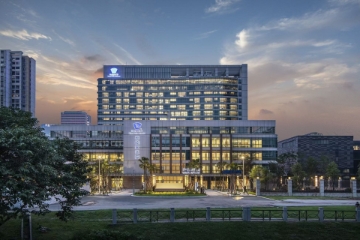
- The physical examination will be conducted at No. 31 Pazhou Avenue, Haizhu District, Guangzhou, Guangdong Province, China (Postcode 510335). Registration will be at the reception desk on the first floor of the South Gate. Please present valid identification documents (such as your ID card/Home Return Permit) upon arrival. It is also recommended to prepare an email confirming your successful order from health.ESDlife for verification upon arrival.
- For order rescheduling or cancellation, please notify the hospital at least one day in advance by phone (contact numbers: +86 4008-919191, +86 18620474049 (WeChat ID same as phone number)). Cancellation is free of charge; for refunds, please contact the hospital to apply. For customers who do not arrive at the hospital as scheduled, the hospital will contact them on the same day; if it is confirmed that they will not attend or cannot be contacted, the hospital will cancel the appointment for that day.
- The physical examination plan order is valid for 6 months, starting from the date the hospital receives the order email from the platform. After the expiration date, the customer can contact the hospital to apply for an extension.
- The hospital offers services in Mandarin, Cantonese, and English.
- If there are any discrepancies or inconsistencies between the Traditional Chinese, Simplified Chinese, and English versions of the merchant page and the health checkup plan page, the Traditional Chinese version shall prevail.
II. Obtaining and Explaining the Medical Examination Report
- The medical examination report is in Simplified Chinese.
- The medical examination report will be issued within 7–10 business days after the examination. An electronic version is provided by default. Clients can choose the following methods to view or receive the medical examination report:
1. Electronic Report: The hospital will provide the client with an electronic version of the report upon completion (sent to the reserved email address or accessible through the hospital's designated electronic channels).
2. Hard copy report: If you require a hard copy report, please inform the hospital staff on the day of your medical examination and provide your mailing address. The hospital will arrange for the report to be mailed after completion. It can be mailed to Mainland China, Hong Kong, and Macau, with postage calculated according to SF Express standards (cash on delivery).
- The package price includes one report interpretation session, available in Mandarin, Cantonese, and English. After completing your medical examination report, please schedule an appointment with the hospital to confirm the interpretation time. Clients can choose from the following channels:
1. Telephone explanation: Please call the hospital in advance to make an appointment for a specific time (contact number: +86 4008-919191, +86 18620474049 (same number for WeChat)). The hospital will proactively contact the customer by phone at the appointment time to provide a telephone explanation.
2. In-person explanation (consultation and interpretation): Please call the hospital in advance to schedule a specific time (contact numbers: +86 4008-919191, +86 18620474049 (WeChat ID same as phone number)). Clients undergoing physical examinations should arrive at the hospital at the appointed time for an in-person explanation. The location for in-person explanations is as follows:
i. No. 31 Pazhou Avenue, Haizhu District, Guangzhou, Guangdong Province, China (Postcode 510335) (Check-in location: Front desk on the first floor of the South Gate; please present valid identification documents such as ID card/Home Return Permit upon arrival)
III. Disclaimer
- In case of any dispute, health.ESDlife and Guangzhou United Family Hospital reserve the right to make the final decision.
1. All health checks/services are not intended for medical diagnosis or treatment. If you experience any signs of illness, you should immediately consult a qualified physician for diagnosis and treatment.
2. This service/product is provided by the merchant. Health.ESDlife does not operate or provide this service/product. Health.ESDlife is not responsible for any errors, omissions, or delays related to this service/product, or for any loss, damage, injury, or legal proceedings arising from the use of this service/product. All claims or inquiries should be directed to the medical examination center or merchant providing the service.

