IgE ALEX3 is the most advanced IgE molecular allergy test on the market, validated by over 1 million tests worldwide.
With a single blood draw, it analyses 300 allergens — including 218 molecular components — covering a broader range than the previous generation. It delivers a comprehensive, clinically focused allergen analysis solution.
ApexHealth IgE ALEX3 is the most comprehensive IgE allergy blood test available on the market — helping you uncover the true causes behind skin itching, allergic rhinitis, gastrointestinal discomfort, and eye redness and swelling.
ApexHealth IgE ALEX³ is the most comprehensive IgE allergy blood test on the market, powered by advanced nano microarray technology. Designed to identify the true root causes behind symptoms such as skin itching, allergic rhinitis, gastrointestinal discomfort, and eye redness and swelling.
ALEX³ is certified as a CE-IVD medical device and has been validated across over 1 million real tests globally and is already trusted by multiple hospitals and clinics in Hong Kong — making it the go-to allergy test for those seeking accurate, clinically reliable answers.
‧300 comprehensive molecular allergens
‧218 molecular allergens — up from 178 in the previous generation — identifying more clinically significant triggers and pinpointing the true allergen
‧Only 2ml of blood required — suitable for infants and young children (finger-prick option available)
‧No need to stop antihistamines before the test
‧Detailed report in 7 working days
‧Report interpretation by a qualified medical professional
‧Experienced phlebotomists at our centre
‧Years of expertise in allergy testing — safe and reliable
Sample Requirement: Only 2ml of blood is required (Finger-prick sample available for children aged 2 and above). If you are currently taking immunosuppressants or high-dose corticosteroids, your antibody levels may be affected. Please consult your doctor before the test.
Test results may be affected if individuals have already used Immunosuppressant.
The captioned allergy related tests have their own limitations and any allergy tests may not be, at all times, possible to identify the actual allergen(s) that is/are/was/were/will be triggering the said allergic response(s) or allergic response(s) now, in the past and/or in future. In some circumstances, it is possible that there might be NO allergen being able to be detected after a testing is done.

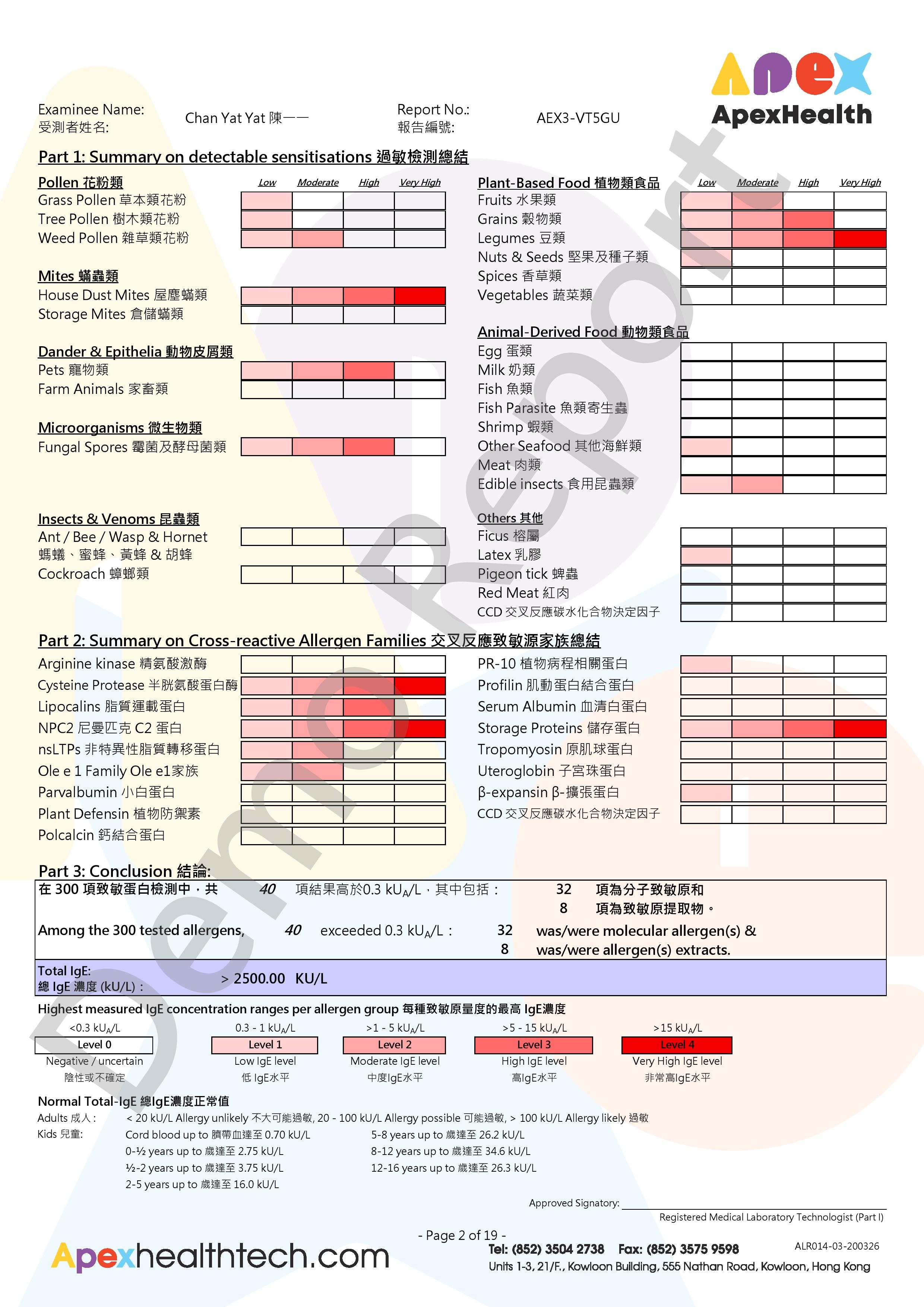
Sample report:







 Recipient1


